
A few weeks ago I noticed Churro eating grass in the garden. Not compulsively, not frantically, just occasionally wandering over to a patch near the fence and having a few methodical bites before losing interest. He’d done it once or twice before, and I’d ignored it, but this time it happened often enough in a short period that I started paying attention.
Churro is on a consistent, well-researched diet, Royal Canin French Bulldog Adult, measured to the gram, reviewed in my dedicated review. I’d written about fiber extensively in my dog high fiber foods article. And yet here was Churro, apparently seeking out supplementary fiber from the garden as if the carefully curated bowl inside wasn’t quite hitting the mark.
I could have shrugged it off. Most sources I initially found said ‘it’s normal, don’t worry about it,’ and left it at that. But ‘it’s normal’ is a conclusion, not an explanation, and the food blog I run is built on the premise that understanding why something happens is more useful than being told not to worry about it. So I spent two weeks going deeper into what the research actually says about why dogs eat grass.
This article is what I found. It’s BreedAndBowl’s ingredient education angle on a question that affects every dog owner at some point not ‘should I worry?’ but ‘what is actually happening, and what does it mean for the bowl?’
Raza’s standard disclaimer: This is ingredient education and behavioural research,
not veterinary advice. If your dog is eating grass excessively, eating grass that may have
been treated with pesticides or herbicides, or seems unwell before or after eating grass,
speak to your vet. This article covers the common case of occasional grass eating in an
otherwise healthy dog.
How Common Is This Actually? (More Than You’d Think)
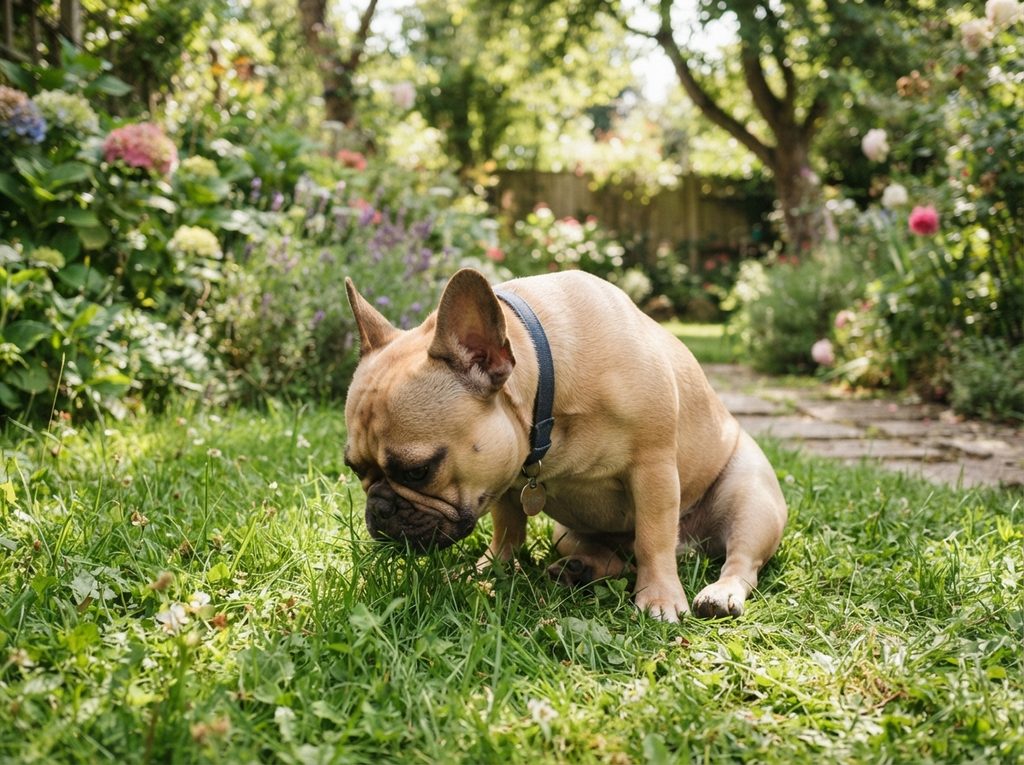
The first thing that surprised me when I started researching this is how widespread the behaviour is. A 2008 study cited in Applied Animal Behaviour Science examined plant-eating behaviour across approximately 1,500 dog owners. The findings: grass was the most commonly eaten plant by a significant margin, and the majority of owners reported their dogs had eaten grass at least occasionally. According to the AKC’s guidance on grass eating, this behaviour has also been observed in wild dogs making it genuinely ancient rather than a quirk of domestication.
According to VCA Animal Hospitals, stool samples from wolves show that between 11% and 47% of wolves eat grass which is a surprisingly wide range but suggests the behaviour is deeply embedded
in canid biology, not something that emerged only in domesticated dogs eating modern kibble.
Churro eating grass is, statistically, one of the most normal things he does. That was mildly reassuring but didn’t fully satisfy the question of why.
The Vomiting Myth — What the Research Actually Found
Before getting to the more interesting explanations, I want to address the most commonly repeated one because the research largely doesn’t support it.
The popular belief that dogs eat grass to make themselves vomit when they feel unwell is widespread and intuitively appealing. It sounds like purposeful self-medication. The problem is that the actual data doesn’t match this explanation well at all.
From the same 2008 study referenced above, and corroborated by multiple subsequent analyses: fewer than 25% of dogs vomit after eating grass, and fewer than 10% of dogs showed signs of illness before eating it. If the primary purpose of grass eating were to induce vomiting when feeling sick, you’d expect those numbers to be much higher most dogs sick before eating, most dogs vomiting after. Neither pattern holds in the data.
The vomiting that does occur in some dogs after eating grass is more likely a consequence of the grass itself being difficult to digest the indigestible, fibre irritates the stomach lining in some dogs rather than a deliberate intended outcome. The distinction matters: these are dogs vomiting because the grass upset their stomach, not dogs strategically using grass to trigger vomiting they wanted.
THE VOMITING MYTH — WHAT THE DATA ACTUALLY SHOWS ■ ‘Dogs eat grass
to make themselves vomit when sick’ not well supported ■ Fewer than 10% of
dogs showed signs of illness before eating grass ■ Fewer than 25% vomited after
eating grass ■ Most grass eating happens in healthy dogs with no preceding illness
■ Vomiting when it occurs is more likely a consequence, not the goal Source:
Applied Animal Behaviour Science, 2008 study of ~1,500 dog owners
The Real Reasons Dogs Eat Grass
The honest answer from the research is that there are several plausible reasons, not one definitive one, and different dogs may be doing it for different reasons. Here’s what the evidence actually supports:
Ancestral instinct
Wild canids ate whole prey animals and the stomach contents of herbivores often contained plant material including grass. Dogs evolved as omnivores, not pure carnivores, and the instinct to seek out plant matter appears to have persisted even as their diet became entirely commercial kibble. Some grass eating may simply be an ancient behavioural echo rather than a response to any specific current need. This would explain why even dogs on nutritionally complete, well-balanced diets still eat grass occasionally.
Boredom, anxiety, or environmental stimulation
A 2019 study in Japan found that younger, more food-motivated, and less mentally stimulated dogs were more likely to eat non-food items including grass. Some dogs may eat grass the way some people eat when bored rather than hungry: not because they need it, but because it’s there and they’re not fully occupied. For Churro specifically, I noticed the grass eating happened most often in the late afternoon, which is his most active and energetic period. That timing pattern made me think boredom or stimulation-seeking was at least part of his particular version of this behaviour.
Taste and texture preference
This one surprises people but is well-supported by observation. Some dogs show clear preferences for specific types of grass spring growth, freshly cut grass, specific species which suggests genuine sensory appeal rather than nutritional seeking. Dogs experience the world primarily through their noses and mouths, and a fresh, moisture-rich grass blade offers a sensory experience that’s simply not available in their bowl.
Fiber and gut signalling — the one I find most interesting
This is the reason most directly relevant to BreedAndBowl’s ingredient education lane. Grass is a source of dietary fiber rough, indigestible fiber that dogs cannot actually break down, but that passes through the digestive tract and affects gut motility and the gut microbiome along the way. I’ll spend a full section on this because it’s the connection between grass eating and the food in the bowl that I think is most useful and least well-explained elsewhere.
The Fiber Connection — the Most Interesting One for a
Food Blog
I wrote a full dedicated article about fiber in dog food what soluble and insoluble fiber do, which sources matter, and how different breeds benefit differently. If you haven’t read it, my dog high fiber foods article is the detailed version. Here’s the condensed version as it applies to grass eating specifically.
Grass is almost entirely indigestible fiber cellulose, primarily that dogs cannot break down with their digestive enzymes. What it does instead is pass through the gut largely intact, adding bulk to what moves through and stimulating gut motility. Grass also contains fermentable components that can feed beneficial gut bacteria making it a crude, unprocessed version of what beet pulp, pumpkin, and oats do in a quality commercial diet.
The emerging field of what researchers are calling ‘psychobiotic feeding’ where animals instinctively seek out foods that support their gut microbiome suggests that dogs whose gut bacteria are out of balance may instinctively seek fiber-rich plant material as a corrective mechanism. This is an area of active research and not yet definitively proven, but the pattern is consistent with what we already understand about how gut bacteria influence appetite and food-seeking behaviour.
This doesn’t mean every grass-eating dog is fiber deficient or has an unbalanced gut microbiome. As PawVortex’s veterinary review notes: ‘Low dietary fiber is the most plausible nutritional reason for grass grazing, but most dogs eating a complete balanced diet are not deficient behaviour and instinct are more common drivers than diet gaps.’ The fiber connection is real and documented; it’s just not the only explanation and not necessarily the applicable one for every dog.
What this means for Churro specifically: his food (Royal Canin French Bulldog Adult) has 3.3% crude fiber on the guaranteed analysis on the lower end of what I’d consider strong fiber support. After researching this article, I’m watching whether the grass eating correlates with his digestive patterns and will consider whether a small addition of pumpkin or a formula with slightly higher fiber content is worth trying. This is the most directly actionable thing I’ve taken from this research.
The Case Study That Changed How I Think About This
This is the piece of research I found most compelling and most directly relevant to the food connection. I mentioned it briefly above but it deserves its own section because the finding is specific enough to be genuinely useful rather than vague.
A 2007 case study published in the Journal of Veterinary Medical Science documented an 11-year-old Miniature Poodle with a seven-year history of daily grass eating and vomiting afterward. Seven years. Every day. Multiple veterinary investigations over that period found no underlying medical cause that explained the behaviour.
The dog was switched to a commercial high-fiber diet. Within seven days, the grass eating stopped entirely and did not return over the follow-up period.
One case study isn’t a clinical trial. One dog’s response to a dietary change doesn’t prove the mechanism for all grass eating in all dogs. But the specificity of the finding seven years of daily behaviour resolving in seven days on a diet change is striking evidence that for at least some dogs, grass eating is directly and specifically a fiber-seeking behaviour in response to a dietary gap. The dog wasn’t bored. It wasn’t stimulation-seeking. It was asking for something the bowl wasn’t providing, and when the bowl changed, the grass eating stopped.
This is why I find the fiber connection the most interesting reason of all the ones I researched not because it applies to every grass-eating dog, but because it’s the reason most directly connected to something an owner can actually act on.
What This Means for What’s in the Bowl
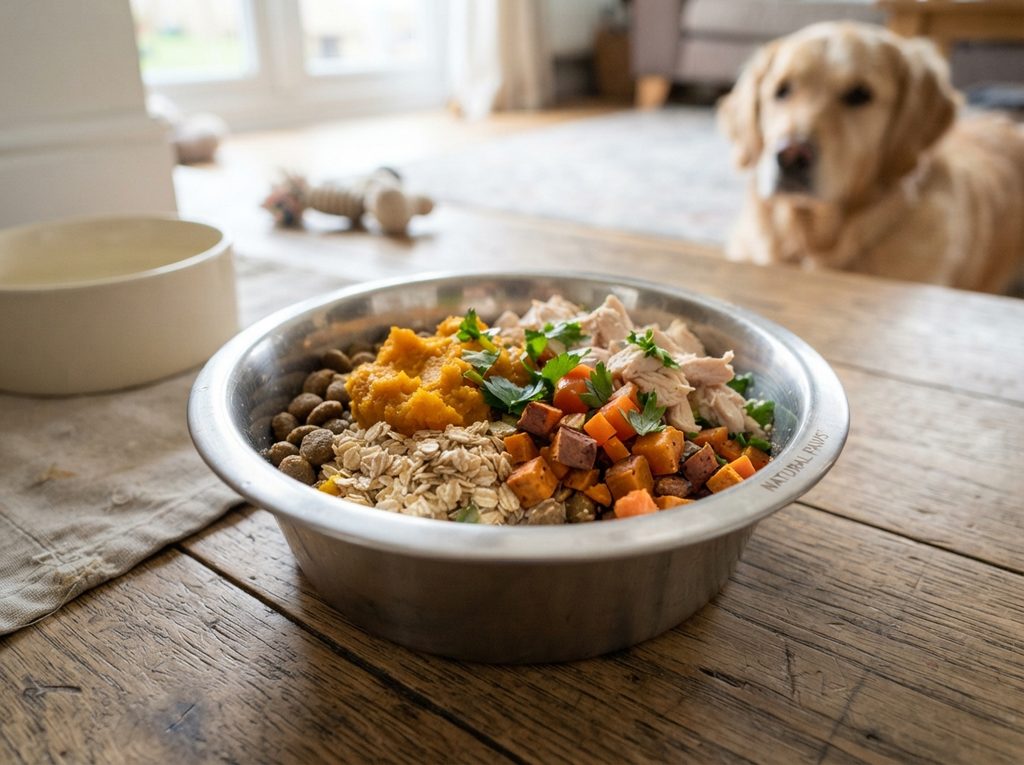
Here’s the BreedAndBowl practical takeaway from all of this research:
If your dog eats grass occasionally and casually — check the fiber
Occasional, calm, non-compulsive grass eating in an otherwise healthy dog is almost certainly normal. But it’s worth checking the crude fiber percentage on your dog’s current food. A formula with 2–3% crude fiber is on the lower end; 4–6% is more supportive; 5–8% is typical of formulas specifically designed with digestive health in mind. If your dog’s food sits at the lower end and they’re regularly seeking grass, that’s at least worth considering as a possible factor.
Check the fiber sources, not just the percentage
As I covered in the fiber article beet pulp, pumpkin, oats, and sweet potato are the most functional soluble fiber sources. A formula that lists flaxseed as its only fiber source is delivering primarily insoluble fiber with limited prebiotic effect. If grass eating seems consistent and tied to digestion, looking for soluble fiber sources specifically in the ingredient list is more targeted than simply looking for a higher crude fiber number.
Consider a small pumpkin supplement first
Before switching formulas based on a grass-eating observation, a simpler first step is adding a small amount of plain canned pumpkin to the existing food a tablespoon for a dog Churro’s size, more for larger breeds. Pumpkin is one of the best soluble fiber sources available, widely tolerated, and very inexpensive. If the grass eating decreases after adding pumpkin, that’s fairly strong evidence the fiber connection was real for your specific dog.
Breed-specific considerations
For the four breeds BreedAndBowl covers, the fiber connection matters differently. Labs given the POMC gene making them food-seeking by nature might eat grass as part of broader food-seeking behaviour rather than a specific fiber response. GSDs with their documented gut microbiome predisposition to digestive sensitivity are a breed where the psychobiotic feeding angle is particularly plausible. Goldens and Frenchies both have documented digestive sensitivity connections where checking fiber quality in the food is a reasonable response to frequent grass eating.
| Breed | Most likely grass eating reason | Food response worth trying |
|---|---|---|
| French Bulldog | Fiber or stimulation (bored/active period) | Check fiber %, add pumpkin |
| Labrador Retriever | Food-seeking behaviour (POMC) or fiber | Rule out boredom first |
| Golden Retriever | Instinct, fiber, or anxiety/stress | Check fiber sources + rule out stress |
| German Shepherd | Gut microbiome/fiber seeking most plausible | Higher prebiotic fiber source |
These are general tendencies, not universal rules. Individual dogs vary significantly within any breed.
When Grass Eating Is Worth a Vet Conversation
Most grass eating doesn’t need a vet visit. But there are specific patterns worth taking seriously:
Sudden, frantic, or compulsive eating
Calm, occasional grazing is very different from a dog frantically eating large amounts of grass as if driven by urgency. Sudden onset of frantic grass eating, especially in a dog that hasn’t done it before, is worth mentioning to a vet it’s more likely to indicate genuine nausea or gut discomfort than the calm behaviour I’ve been describing throughout this article.
Consistent vomiting afterward
Most dogs don’t vomit after eating grass that’s the research finding. If your dog consistently vomits after eating grass, that’s a specific pattern worth investigating rather than normalising as ‘just what dogs do.’
Grass treated with pesticides or herbicides
The grass itself isn’t the main risk in grass eating it’s what the grass has been treated with. If your lawn or any lawn your dog accesses has been treated with pesticides, herbicides, or fertilizers, the grass eating risk profile changes significantly. Keep your own lawn pesticide-free and be watchful about grass in public spaces. After any lawn treatment, most sources recommend keeping dogs off the treated area for at least 24 to 48 hours.
My Honest Final Take
Churro is still occasionally eating grass in the garden. I’ve stopped worrying about it in the way I was initially not because I’ve decided it’s meaningless, but because I now understand what it probably is.
My best assessment for Churro specifically: a combination of the afternoon boredom/stimulation factor and possibly a mild fiber signal from his gut. His food’s 3.3% crude fiber is functional but not high, and the grass eating tends to happen at a time of day when he’s energetic and under-occupied. I’m adding a tablespoon of plain canned pumpkin to his food a few times a week and watching whether the grass eating decreases. That’s the most evidence-based, low-effort response I can take.
The research conclusion that I keep coming back to: grass eating is almost always normal, the vomiting narrative is mostly myth, the fiber connection is real and worth checking in the food, and the single most memorable data point is a dog that stopped seven years of daily grass eating within a week of a diet change. That dog’s owner knew something was wrong. The answer was in the bowl the whole time.